On this page
- What each option is
- Root canal vs extraction: side-by-side comparison
- How to choose
- Frequently Asked Questions
What each option is
A deep ache, pain when you bite, or a tooth that throbs and will not settle — should you try to save it, or have it taken out? If you are comparing root canal vs extraction in Bradford, the real choice is between keeping your natural tooth with root canal therapy and removing the tooth and then deciding how, or whether, to replace it. This guide explains how each option works, what the research reports about how long treated teeth last, and who each option does and does not suit.
Root canal therapy removes the infected or inflamed pulp from inside the tooth, cleans and disinfects the root canals, seals them, and then restores the tooth — usually with a filling and, for back teeth, often a crown to protect it. You can read more on our root canal therapy service page in Bradford. Extraction removes the whole tooth, including its root. After an extraction, the gap can be left as it is, or replacement with an implant, bridge or denture can be considered. Professional guidance for dentists in Ontario is published by the Royal College of Dental Surgeons of Ontario.
Not every painful tooth can be saved. A tooth cracked into the root, or with too little healthy structure left, may not be restorable even with root canal therapy — which is why assessment and X-rays come first.

Root canal vs extraction: side-by-side comparison
| Factor | Root canal therapy (save the tooth) | Extraction (remove the tooth) |
|---|---|---|
| What it is / how it works | The pulp inside the tooth is removed, the canals are cleaned, shaped and disinfected, then sealed. The tooth is rebuilt with a filling and, where needed, a crown. The natural root stays in the jawbone. | The entire tooth and root are removed from the socket. The area then heals over the following weeks. Replacement of the missing tooth, if wanted, is a separate treatment planned afterwards. |
| Typical lifespan | Salehrabi and Rotstein (2004, Journal of Endodontics, analysis of more than 1.4 million root-canal-treated teeth) reported that 97% of teeth remained in the mouth 8 years after initial non-surgical root canal treatment — retention of the tooth, which is different from saying no further treatment was ever needed. Torabinejad et al. (2007, Journal of Endodontics systematic review) found the long-term survival of root-canal-treated teeth restored with crowns was broadly comparable to implant-supported single crowns in the studies reviewed. | Extraction is permanent — the natural tooth does not come back. How long any replacement lasts depends on the type chosen: for context, Jung et al. (2012, Clinical Oral Implants Research) reported implant survival of 97.2% at 5 years and 93.2% at 10 years for implants supporting single crowns. Bridges and dentures have their own maintenance and replacement cycles, discussed at assessment. |
| Maintenance and care | Brush and clean the restored tooth as normal, including interdental cleaning. A root-canal-treated tooth no longer has a living pulp, so it cannot signal new decay with pain in the same way — regular checkups and X-rays as advised matter. A crown, where placed, protects against fracture but does not remove the need for cleaning. | Follow post-extraction care instructions while the socket heals, keep the area clean as instructed, and attend follow-up. If the tooth is replaced, the replacement has its own cleaning routine, which your dentist will demonstrate. |
| Effect on neighbouring teeth and jawbone | Your natural root continues to transfer biting forces to the jawbone, and neighbouring teeth keep their positions. No neighbouring tooth needs to be reshaped unless a separate treatment requires it. | After removal, neighbouring teeth may gradually drift into the gap and the opposing tooth may over-erupt. Bone at the empty site gradually reduces over time because the root no longer transfers forces into it. Replacing the tooth can reduce some of these effects, depending on the option chosen. |
| Who it suits and who it does not | May suit a tooth with an infected or inflamed pulp that still has enough healthy structure and a restorable root, in a patient able to complete the restoration afterwards. It does not suit teeth cracked into the root, teeth with severe untreatable periodontal disease, or teeth with too little structure left to rebuild. | May suit a tooth that cannot be restored predictably, a tooth fractured into the root, or a case where the patient, after hearing both options, prefers removal. It may not suit patients who would struggle to replace a strategically important tooth, or where medical factors make surgery or healing higher risk — these are assessed individually. |
| Number of visits and treatment timeline | Often one to two visits for the root canal itself, followed by a further visit for the final restoration or crown. Timelines vary with infection, tooth anatomy and whether the tooth needs to settle between stages. | Often a single visit for the removal itself, followed by healing over several weeks. If replacement follows, that adds its own timeline — for example, implants usually take several months from placement to final crown. |
| CDCP coverage | Coverage for root canal therapy under the Canadian Dental Care Plan depends on eligibility and preauthorization, and molar treatment has specific conditions. Confirm your own situation before treatment begins. | Coverage for extractions under the Canadian Dental Care Plan depends on eligibility and, for some services, preauthorization. Dental implants and fixed bridges, if considered as replacements, are NOT covered by the CDCP. |
Factors that affect cost include the tooth involved and its root anatomy, whether a crown is needed afterwards, the complexity of an extraction, and whether and how the tooth is replaced. Because these vary so much by case, cost is discussed after an in-person assessment rather than quoted in general terms here.
How to choose
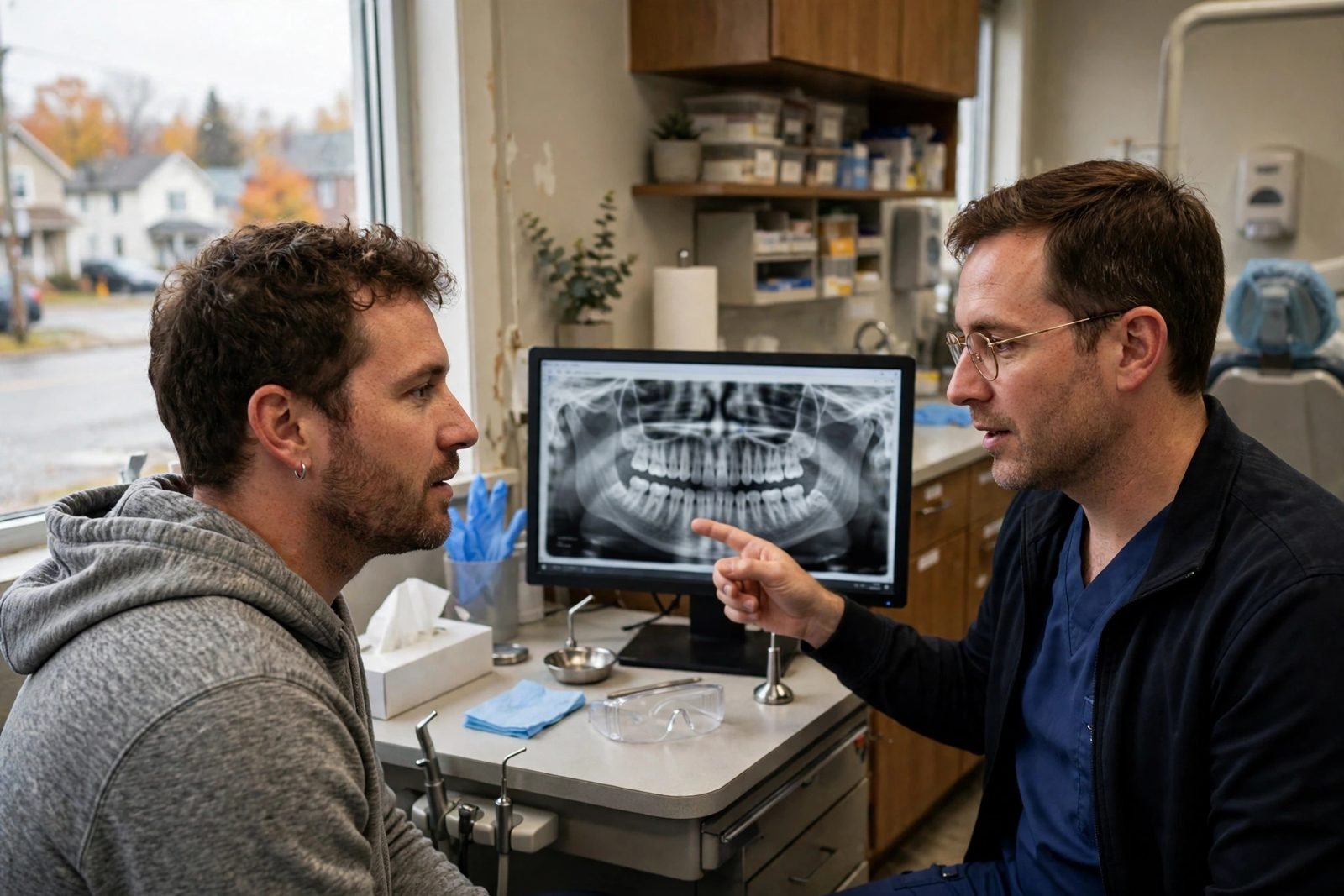
The starting question is whether the tooth can be saved predictably. If it can, root canal therapy keeps your natural tooth, your bite and the bone support around the root, and the research above shows most treated teeth are retained for many years. If the tooth cannot be restored — because of a root fracture, extensive decay or advanced gum disease — extraction avoids investing in a tooth with a poor outlook, but it creates a gap whose consequences and replacement options should be planned at the same time, not afterwards. Your dentist will show you the X-rays, explain the outlook for your specific tooth, and lay out both paths honestly, including what happens if you delay.
Frequently Asked Questions
The tooth is numbed with local anaesthesia during treatment, and post-treatment soreness is managed as advised. Experiences vary between patients, and no procedure can honestly be described as completely free of discomfort for everyone.
A tooth that has needed root canal therapy has usually already lost structure to decay or a large filling, and it no longer has a living pulp. That is why back teeth are often protected with a crown afterwards — to reduce fracture risk during chewing.
Some gaps, such as a wisdom tooth, usually do not need replacement. For other teeth, drifting of neighbouring teeth, over-eruption of the opposing tooth, uneven chewing and gradual bone reduction at the site can follow. Your dentist will explain which risks apply to the specific tooth.
Yes. Persistent infection, complex canal anatomy, new decay or a fracture can mean a treated tooth later needs retreatment, surgery or extraction. This is one reason follow-up and completing the final restoration on time matter.
An active infection or severe pain should be assessed promptly rather than left. Hola Dentistry holds same-day emergency slots on the days the clinic is open — call to check availability for that day. Once the immediate problem is assessed, your dentist will explain how much time you reasonably have to decide between saving and removing the tooth.
Coverage depends on eligibility and preauthorization, and conditions apply to some teeth. Dental implants and fixed bridges are not covered by the CDCP if you are considering them as replacements. The team can help you understand what to confirm before treatment.
Often, yes for back teeth, because they carry heavy chewing forces and have usually lost significant structure. Front teeth with enough remaining structure may only need a filling. Your dentist will advise based on how much healthy tooth remains.
It can. Keeping or removing a tooth affects tooth positions and the space available for any future orthodontic plan, including clear aligners. Mention any future treatment you are considering so the plan takes it into account.
Trying to decide whether to save a tooth or have it removed? Book an assessment at Hola Dentistry in Bradford by calling (905) 551-0055. The team will examine the tooth, show you what the X-rays reveal, and explain both options and their limitations so you can decide with the full picture.