Dental Bonding in Bradford, Ontario
Even minor enamel irregularities—like a small chip on a front tooth, a persistent gap between teeth, or localized surface discolouration—can impact how comfortably you express yourself in public. At Hola Dentistry, we view cosmetic dental bonding as a highly efficient, conservative solution to protect and balanced compromised teeth. By utilizing specialized composite materials that mirror the natural structure of your enamel, our team can restore structural integrity to your smile without requiring invasive tooth alteration or multi-week lab turnarounds.
We proudly welcome patients from across Bradford West Gwillimbury, Innisfil, Newmarket, East Gwillimbury, Holland Landing, and Bond Head for expert dental bonding treatments. We focus heavily on structural preservation, ensuring your routine corrections align perfectly with your natural biting forces and facial shape. Because patient education is at the core of our preventive care model, our clinical team details your material options, hygiene responsibilities, and expected treatment longevity fluently in both English and Persian (فارسی).
The Structural Mechanics of Cosmetic Bonding
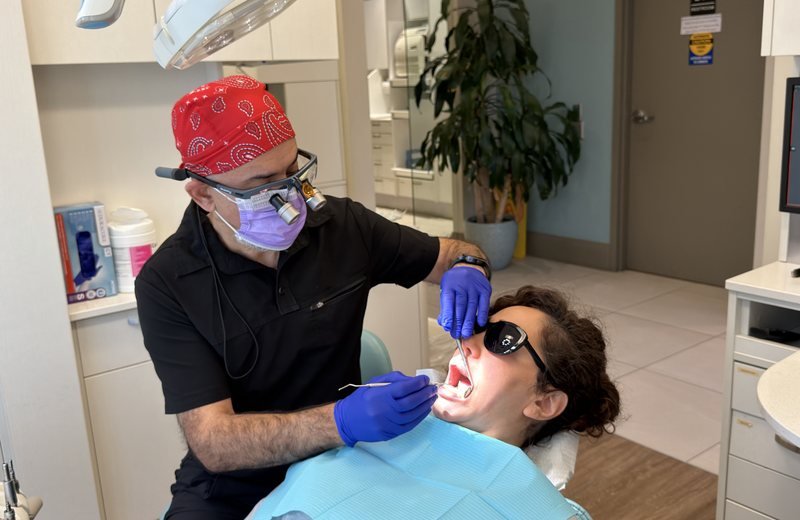
Dental bonding uses a flexible, glass-infused composite resin to reshape and restore targeted teeth right beside the chair. This procedure is widely recognized for its minimally invasive nature, making it an excellent introductory option for minor visual and structural updates.
- Preservation of Natural Enamel: Unlike custom crowns or porcelain veneers, which require the permanent micro-shaping of outer enamel surfaces, cosmetic bonding requires minimal to no structural tooth alteration. Our clinicians manage these tooth-preserving additions under the strict safety and material application guidelines monitored by the Royal College of Dental Surgeons of Ontario (RCDSO).
- Seamless Material Shade-Matching: The composite material is entirely custom-blended right in our office to match the exact translucent colour and characteristic shading of your surrounding natural enamel. This precise alignment matches the aesthetic quality and clinical safety benchmarks supported by the Ontario Dental Association (ODA).
- Single-Appointment Turnaround: Because the composite resin is applied and sculpted directly onto the tooth by our dentists, there is no need for external laboratory fabrication, temporary restorations, or second appointments. Your tooth repair is completed from start to finish in a single visit.
Direct Decision-Support: Dental Bonding vs. Porcelain Veneers
To help you understand when dental bonding is the ideal choice for your structural goals, review our clinical comparison guide below:
| Treatment Feature | Cosmetic Dental Bonding (Direct Resin) | Custom Porcelain Veneers (Indirect Ceramic) |
|---|---|---|
| Primary Clinical Focus | Repairing small, localized chips, gaps, or single-tooth fractures. | Correcting comprehensive alignment, shape, or widespread stains. |
| Enamel Alteration | Minimal to none; resin bonds directly to unchanged enamel. | Requires micro-shaping of the outer enamel layer. |
| Total Visits Required | Completed in 1 single visit directly in the chair. | Requires 2 separate appointments (Prep & Bonding). |
| Stain Resistance | Moderate; can pick up surface stains over time. | Extremely high; non-porous ceramic resists all dyes. |
| Average Treatment Lifespan | Typically 3 to 7 years; can be refreshed or repolished easily. | Typically 10 to 15+ years before requiring replacement. |
Repairing small, localized chips, gaps, or single-tooth fractures.
Correcting comprehensive alignment, shape, or widespread stains.
Minimal to none; resin bonds directly to unchanged enamel.
Requires micro-shaping of the outer enamel layer.
Completed in 1 single visit directly in the chair.
Requires 2 separate appointments (Prep & Bonding).
Moderate; can pick up surface stains over time.
Extremely high; non-porous ceramic resists all dyes.
Typically 3 to 7 years; can be refreshed or repolished easily.
Typically 10 to 15+ years before requiring replacement.
Frequently Asked Questions
How is dental bonding different from a cavity filling?
Both can use tooth-coloured composite resin. A filling repairs tooth structure affected by decay or damage; cosmetic bonding focuses on changes such as a small chip, shape or spacing. An examination determines the appropriate purpose and treatment.
Can bonding close a gap between front teeth?
Bonding may be considered for some small gaps. Your bite, tooth proportions and gum health affect suitability. Larger alignment concerns may need a different approach; ask about the alternatives before choosing.
Will I need local anaesthetic for bonding?
This depends on the tooth and the work involved. Your dentist will explain whether tooth preparation and anaesthetic are appropriate. Tell the team about sensitivity or anxiety before treatment.
How should I care for bonded teeth?
Ask for cleaning and bite-care instructions specific to the restoration. Avoid using teeth to open objects. Contact the clinic if a bonded area chips, feels sharp or changes your bite; bonding may need maintenance or repair.
What should I discuss at a bonding consultation in Bradford?
Explain the chip, shape, colour or spacing that concerns you. Ask what can be changed conservatively, whether whitening or a veneer is relevant, and what maintenance may be needed. Cosmetic bonding should not be assumed to qualify for CDCP; coverage depends on the proposed service.
Related guides: dental fillings, teeth whitening and veneers. Independent information: ODA cosmetic dentistry, CDA dental procedures and RCDSO. These resources do not imply endorsement.
Book Your Educational Consultation in Bradford
Leaving minor chips or surface fractures unaddressed can allow plaque to gather along the rough edges, leading to localized decay and more extensive structural damage over time. Contact Hola Dentistry today to schedule your comprehensive dental bonding assessment and explore the most conservative paths to a healthy, balanced smile.