Dental Implants in Bradford, Ontario
Dental implants are one option for replacing missing teeth and may be used to support a single replacement tooth, multiple teeth, or a more extensive implant-supported restoration. At Hola Dentistry in Bradford, implant treatment planning begins with an assessment of your oral health, gums, available bone, bite, existing teeth, and overall treatment goals.
Depending on your needs, options may include a single dental implant, All-on-4 treatment, or an implant-supported bridge. The dentist can explain the treatment process, potential limitations, maintenance requirements, and alternatives before recommending whether implant treatment may be appropriate for you. The Hola Dentistry team can also assist patients in English and Persian (فارسی).
Dental Implant Options in Bradford
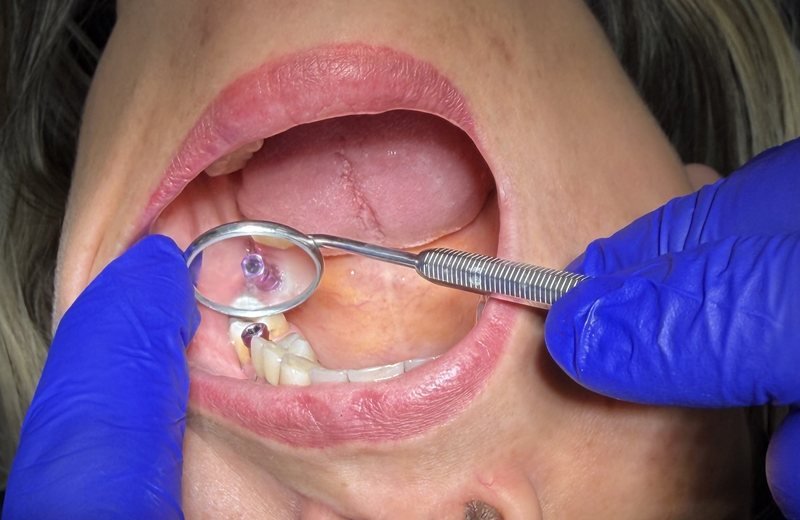
Dental implants are artificial tooth roots placed in the jawbone to support replacement teeth. Depending on how many teeth are missing, your oral health, available bone, and treatment goals, implant options may include a single dental implant, All-on-4 treatment, or an implant-supported bridge. A dental assessment is needed to determine which approach, if any, may be appropriate for you.
- Single Dental Implants
- All-on-4 Dental Implants
- Implant-Supported Bridges
1. Single Dental Implants for One Missing Tooth
A single dental implant may be considered when one tooth is missing. The implant is placed in the jawbone and can support a custom dental crown after the appropriate healing and restorative steps. Compared with a traditional bridge, a single implant may also avoid the need to prepare healthy neighbouring teeth for crowns, depending on the individual case.
Before treatment, the dentist assesses factors such as your gums, available bone, bite, neighbouring teeth, general health, and the location of the missing tooth. Implant treatment can involve several stages and appointments, and healing time varies from person to person.
2. All-on-4 Dental Implants for Full-Arch Tooth Replacement
All-on-4 is a full-arch implant-supported treatment approach that uses four strategically placed dental implants to support a fixed full-arch restoration. It may be considered for some patients who are missing most or all of the teeth in an arch, but suitability depends on individual oral health, available bone, medical history, bite, and treatment needs.
The treatment sequence and timing of temporary and final teeth vary according to the individual case. Factors such as implant stability, healing, oral health, and the treatment plan developed after assessment can affect when each stage is completed.
3. Implant-Supported Bridges for Multiple Missing Teeth
An implant-supported bridge may be considered when several teeth are missing in the same area. Instead of relying on natural teeth as the main supports, the bridge is anchored to dental implants placed in the jawbone. The number and position of implants depend on the location of the missing teeth, available bone, bite, and the treatment plan.
This approach differs from a traditional tooth-supported bridge, which is typically supported by prepared natural teeth beside the missing-tooth space. A dental assessment is needed to determine whether an implant-supported bridge, a traditional bridge, or another tooth-replacement option may be appropriate.
Comparing Dental Implants, Traditional Bridges & Removable Dentures
Dental implants, fixed bridges, and removable dentures can all be used to replace missing teeth, but they differ in how they are supported, how they affect nearby teeth, whether they are removable, and the maintenance they require. The most appropriate option depends on your oral health, the number and location of missing teeth, available bone, bite, and treatment goals.
| Feature | Dental Implants (Single or Full Arch) | Traditional Fixed Bridges | Standard Removable Dentures |
|---|---|---|---|
| How the Replacement Is Supported | Supported by dental implants placed in the jawbone. The restoration may replace one tooth, several teeth, or a full arch depending on the treatment plan. | Typically supported by natural teeth prepared for crowns on either side of the missing-tooth space. Some bridges can instead be supported by dental implants. | A removable prosthesis that replaces missing teeth. Partial dentures may use clasps or other components connected to remaining teeth. |
| Jawbone Considerations | Adequate bone is needed to support dental implants. Bone quantity and quality are evaluated as part of implant assessment and treatment planning. | A traditional tooth-supported bridge does not place an implant in the missing-tooth site. Implant-supported bridges are a separate treatment option. | Dentures require ongoing assessment of fit and the surrounding oral tissues. Adjustments or relining may be needed over time. |
| Effect on Nearby Teeth | A single implant may avoid the need to prepare healthy neighbouring teeth for crowns, depending on the individual case. | Traditional bridge treatment generally requires preparation of the supporting natural teeth for crowns. | Partial dentures may use clasps or other components on remaining teeth. The design and effect on supporting teeth vary according to the individual case. |
| Maintenance and Replacement | Implant-supported teeth require daily cleaning and regular dental review. Maintenance needs vary according to the restoration, bite, oral health, and individual habits. | Fixed bridges require daily cleaning, including underneath the replacement teeth, along with regular dental care. Repair or replacement needs vary over time. | Dentures require daily cleaning and ongoing assessment of their fit. Adjustment, relining, repair, or replacement may be needed as oral tissues and the prosthesis change over time. |
How the Replacement Is Supported
Supported by dental implants placed in the jawbone. The restoration may replace one tooth, several teeth, or a full arch depending on the treatment plan.
Typically supported by natural teeth prepared for crowns on either side of the missing-tooth space. Some bridges can instead be supported by dental implants.
A removable prosthesis that replaces missing teeth. Partial dentures may use clasps or other components connected to remaining teeth.
Jawbone Considerations
Adequate bone is needed to support dental implants. Bone quantity and quality are evaluated as part of implant assessment and treatment planning.
A traditional tooth-supported bridge does not place an implant in the missing-tooth site. Implant-supported bridges are a separate treatment option.
Dentures require ongoing assessment of fit and the surrounding oral tissues. Adjustments or relining may be needed over time.
Effect on Nearby Teeth
A single implant may avoid the need to prepare healthy neighbouring teeth for crowns, depending on the individual case.
Traditional bridge treatment generally requires preparation of the supporting natural teeth for crowns.
Partial dentures may use clasps or other components on remaining teeth. The design and effect on supporting teeth vary according to the individual case.
Maintenance and Replacement
Implant-supported teeth require daily cleaning and regular dental review. Maintenance needs vary according to the restoration, bite, oral health, and individual habits.
Fixed bridges require daily cleaning, including underneath the replacement teeth, along with regular dental care. Repair or replacement needs vary over time.
Dentures require daily cleaning and ongoing assessment of their fit. Adjustment, relining, repair, or replacement may be needed as oral tissues and the prosthesis change over time.
Frequently Asked Questions
Are dental implants covered by insurance?
Dental implant coverage varies by insurance provider and individual plan. Some plans may cover part of the treatment, while others may limit or exclude implant-related services. Because coverage depends on the specific procedure and policy, it is important to review your plan or request a pre-treatment estimate before starting care.
Is dental implant placement painful?
Comfort during and after implant treatment varies from person to person. Your dentist will discuss the planned procedure, available pain-control or anesthesia options, and what you may expect during recovery. Some soreness or discomfort can occur after implant surgery, and your dental team can provide instructions for managing it. Contact your dentist if pain is severe, worsening, or does not improve as expected.
How long does the dental implant process take?
The dental implant timeline varies according to the number and location of implants, your oral health, available bone, healing, and the type of final restoration. After an implant is placed, healing and integration with the jawbone can take several months. Additional appointments may be needed for assessment, restorative treatment, and fitting the final crown, bridge, or other implant-supported restoration.
Book a Dental Implant Consultation in Bradford
If you are considering dental implants to replace one or more missing teeth, a consultation can help determine which options may be appropriate for you. The dentist can assess your oral health, gums, available bone, bite, and treatment goals, then explain potential implant options, alternatives, treatment stages, limitations, and maintenance requirements before you decide whether to proceed.