Orthodontics in Bradford: Straight Alignment for Long-Term Oral Health
Misaligned teeth affect more than just the appearance of your smile. When teeth overlap, are crowded, or do not come together properly, everyday habits like brushing and flossing become significantly harder. Over time, poorly aligned teeth can lead to localized food packing, accelerated enamel wear, chronic gum inflammation, and ongoing strain on your jaw joints. At Hola Dentistry, we view orthodontic alignment as a vital piece of your preventative healthcare routine, designed to protect your natural smile for life.
We proudly welcome patients from across Bradford West Gwillimbury, Innisfil, Newmarket, East Gwillimbury, Holland Landing, and Bond Head for clear, educational orthodontic assessments. We work with children experiencing early crowding, teenagers developing their permanent bites, and adults looking to restore their dental alignment. Because choosing how to straighten your teeth is a significant health decision, our clinical team details every phase of treatment, timeline, and hygiene requirement clearly in both English and Persian.
Our Core Orthodontic Treatments: Choosing Your Alignment Path
Modern orthodontics offers different structural mechanisms to guide teeth into their correct positions safely. We focus on two primary delivery systems tailored to your daily routine, dental complexity, and lifestyle preferences.
1. Clear Aligners (Best for a Discreet, Removable Alignment Solution)
Clear aligners offer a highly discreet, flexible alternative to traditional metal hardware. This system uses a custom-made series of transparent, medical-grade plastic trays designed to sit comfortably over your teeth, applying gentle, continuous pressure to guide them into place step by step.
Our office designs clear aligner pathways under the diagnostic and imaging standards enforced by the Royal College of Dental Surgeons of Ontario (RCDSO). Because the trays are completely removable, you can eat your regular meals without food restrictions and brush your teeth normally. However, achieving predictable results requires an educational commitment to wearing the aligners for at least 22 hours every single day.
View Service Details →2. Dental Braces (Best for Correcting Complex Bite and Structural Issues)
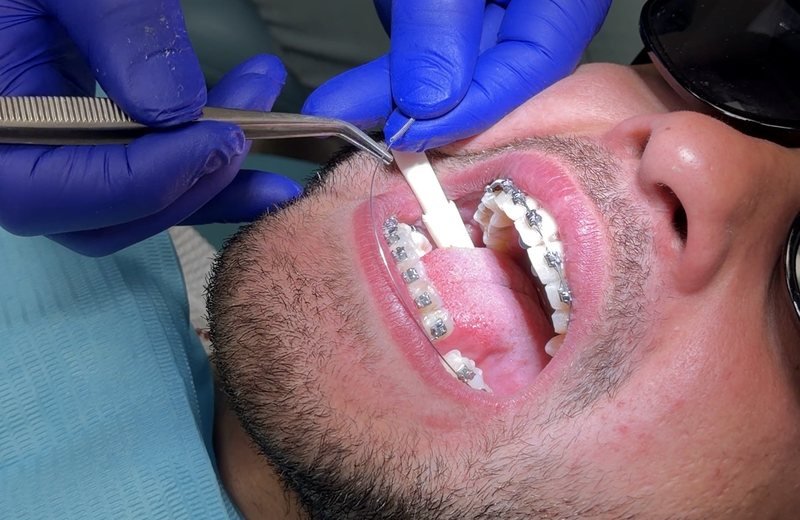
Traditional dental braces remain the most reliable and powerful tool available for managing severe crowding, large gaps, or complex bite misalignments like overbites and underbites. This time-tested system uses durable metal or ceramic brackets bonded securely to your enamel, connected by a specialized archwire that our dentists periodically adjust to shift your teeth with high precision.
Our structural braces program adheres directly to the preventative care frameworks supported by the Ontario Dental Association (ODA). Because braces are fixed permanently in place for the duration of your care, they work continuously without relying on daily compliance, making them an excellent, dependable option for younger teens and complex orthodontic movements.
View Service Details →Direct Decision-Support: Clear Aligners vs. Dental Braces
To help you evaluate which orthodontic method aligns best with your daily routine and structural requirements, review our direct comparison guide below:
| Feature | Custom Clear Aligners | Traditional Dental Braces |
|---|---|---|
| Visibility Level | Virtually invisible; clear plastic design. | Visible; uses metal or ceramic brackets. |
| Removability | Removable for eating, brushing, and flossing. | Fixed permanently; cannot be removed by the patient. |
| Dietary Restrictions | None; trays are removed before every meal. | Requires avoiding sticky, hard, or crunchy foods. |
| Daily Discipline | Requires 22 hours of strict daily wear to stay on track. | Works automatically 24/7 without daily compliance. |
| Best Clinical Use Cases | Mild to moderate crowding, spacing, or minor relapse. | Advanced crowding, rotation, and complex bite corrections. |
Virtually invisible; clear plastic design.
Visible; uses metal or ceramic brackets.
Removable for eating, brushing, and flossing.
Fixed permanently; cannot be removed by the patient.
None; trays are removed before every meal.
Requires avoiding sticky, hard, or crunchy foods.
Requires 22 hours of strict daily wear to stay on track.
Works automatically 24/7 without daily compliance.
Mild to moderate crowding, spacing, or minor relapse.
Advanced crowding, rotation, and complex bite corrections.
Frequently Asked Questions
What is the best age for a child to have an initial orthodontic exam?
We recommend bringing children in for their first orthodontic evaluation around the age of seven. At this stage, their first permanent molars have erupted, allowing our dentists to evaluate how the jaw is growing and spot early structural issues—like crossbites or severe crowding—before the jaw bone fully hardens.
How do I keep my teeth clean while wearing traditional dental braces?
Brushing your teeth carefully after every meal is necessary to prevent plaque from building up around your brackets and wires. We recommend using specialized interdental brushes to clean beneath the archwire and utilizing orthodontic threaders or water flossers to ensure you can clean your gumline safely every day.
Will I need to wear a retainer after my orthodontic treatment is finished?
Yes. Wearing a custom retainer is a mandatory phase of any orthodontic treatment. Once your teeth move into their ideal positions, the surrounding jawbone needs time to solidify around the new root placements. Wearing your retainer as directed stops your teeth from naturally shifting back toward their old positions over time.
Book an Educational Consultation in Bradford
Leaving crowded or misaligned teeth unaddressed can lead to uneven enamel wear, localized decay, and jaw joint strain over time. Contact Hola Dentistry today to schedule your comprehensive orthodontic assessment and explore the best alignment paths for your family.