Root Canal Therapy in Bradford, Ontario
Root canal therapy in Bradford treats inflamed or infected pulp inside a tooth and may help retain the natural tooth when it can be restored. Toothache, lingering sensitivity, swelling or a damaged tooth should be assessed; symptoms alone cannot establish whether a root canal is needed.
At Hola Dentistry, our general dentists examine the tooth, review appropriate tests and imaging, and discuss treatment or specialist referral when indicated. We explain the options, material risks, expected recovery and final restoration before treatment is agreed.
The Root Canal Process: What to Expect
The dentist explains the proposed steps and checks your comfort throughout treatment. The number of visits and whether specialist referral is needed depend on the tooth and clinical findings.
- Local Anaesthetic: Before treatment begins, we use local anesthetic to numb the area and check your comfort before proceeding. Sensations and comfort levels can vary, so please tell the dentist if you feel discomfort at any point.
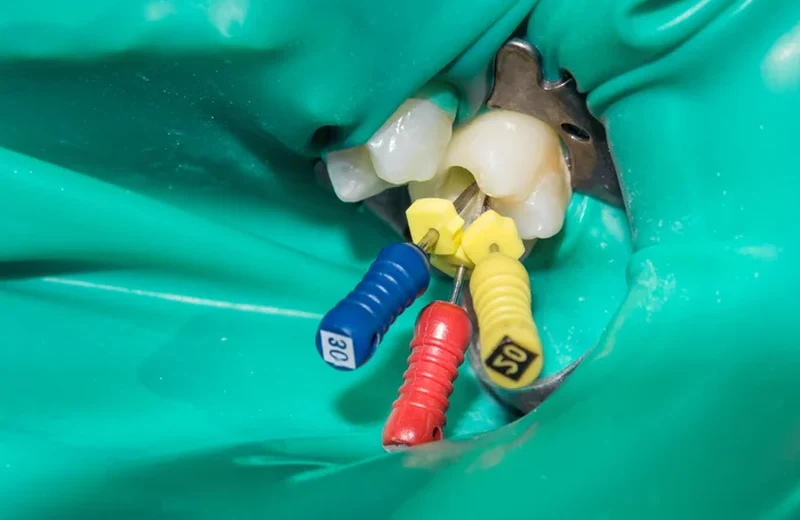
- Isolating the Infected Space: A dental dam isolates the tooth from saliva and helps protect the surrounding mouth during treatment.
- Clearing the Infected Pulp: We create a tiny, precise opening in the crown of the tooth to access the damaged inner chamber. Using highly flexible, specialized instruments, our dentists carefully remove the infected nerve tissue, bacteria, and localized debris from deep inside the root canals.
- Anti-Microbial Rinsing and Sealing: The empty root canals are thoroughly disinfected using appropriate disinfecting solutions to reduce remaining bacteria. We then fill the cleaned canal space with a biocompatible, rubber-like material called gutta-percha, sealing the inner pathways to reduce the risk of reinfection.
- Structural Core Reinforcement: The external opening is sealed with a durable composite filling. The final restoration depends on the tooth's location, cracks, biting forces and remaining structure. A filling or crown may be recommended to restore and protect the tooth; no restoration guarantees long-term survival.
Direct Patient Decision Support: Saving the Tooth vs. Full Extraction
To help you evaluate your options accurately when facing a deep inner tooth infection, review our direct clinical comparison guide below:
| Feature | Therapeutic Root Canal Therapy | Complete Tooth Extraction (Removal) |
|---|---|---|
| Primary Clinical Goal | Disinfecting the inner chamber while keeping your natural tooth root intact. | Removing the entire tooth structure permanently from your jaw. |
| Bite Mechanics Stability | Designed to preserve the natural tooth and support function; long-term outcomes depend on the tooth's condition, restoration, and ongoing care. | May allow neighbouring teeth to shift into the gap over time if the space is not restored. |
| Long-Term Bone Preservation | Retaining the natural tooth can help maintain normal biting function. | Bone changes may occur after extraction, particularly if the space is not restored. |
| Restoration After Treatment | May require a permanent filling or crown, depending on the tooth's location and remaining structure. | Replacement options may include an implant, bridge or partial denture, depending on clinical needs and patient preferences. |
Disinfecting the inner chamber while keeping your natural tooth root intact.
Removing the entire tooth structure permanently from your jaw.
Designed to preserve the natural tooth and support function; long-term outcomes depend on the tooth's condition, restoration, and ongoing care.
May allow neighbouring teeth to shift into the gap over time if the space is not restored.
Retaining the natural tooth can help maintain normal biting function.
Bone changes may occur after extraction, particularly if the space is not restored.
May require a permanent filling or crown, depending on the tooth's location and remaining structure.
Replacement options may include an implant, bridge or partial denture, depending on clinical needs and patient preferences.
Insurance and CDCP Information
The CDCP may cover eligible root canal treatment. Coverage depends on active benefits, the tooth and treatment proposed, restorability criteria and applicable plan rules. Retreatment and some other endodontic procedures require preauthorization. A crown or other final restoration is assessed separately; approval of root canal treatment does not automatically approve the restoration.
Ask the clinic to check coverage and any required approval before treatment. Private dental plans have their own terms, and coverage is not guaranteed.
See our CDCP information and confirm the proposed services with the dental team.
Symptoms, Follow-up and Treatment Alternatives
Preparing for an assessment? Use our root canal consultation question checklist. For treatment availability and assessment in Bradford, use this service page.
Root canal treatment may be considered when a restorable tooth has damaged or infected pulp. An extraction or another option may be more appropriate when the tooth cannot be maintained. Ask how the diagnosis, remaining tooth structure and gum support affect your choices.
Follow the dentist's aftercare instructions and complete the recommended final restoration. Contact the clinic for worsening pain, swelling, an uneven bite or a lost temporary filling. If swelling interferes with breathing or swallowing, seek emergency medical care.
Preparing for a visit? Read our root canal consultation questions, or request guidance through our emergency dentistry page for an urgent concern.
Patient Information and References
- Canadian Dental Association (CDA): root canal treatment
- Ontario Dental Association (ODA): common dental procedures
- Royal College of Dental Surgeons of Ontario (RCDSO): consent to treatment
- Government of Canada: services covered under the CDCP
These independent resources provide general information and do not imply endorsement of this clinic or page. Your dentist will explain the findings and options for your individual care.
Frequently Asked Questions
Will root canal treatment be painful?
Local anaesthetic is used to help manage discomfort. Your dentist checks your comfort before proceeding. Tell the team if you feel pain or are anxious; the approach can be adjusted to your needs.
What symptoms should I report after treatment?
Some tenderness can occur. Contact your dentist for severe or worsening pain, swelling, a lost temporary filling or concerns about your bite. Follow the individual aftercare instructions provided.
If my toothache stops, do I still need an assessment?
Yes. A change in pain does not establish that the cause has resolved. A dentist needs to examine the tooth and may recommend tests or X-rays before explaining appropriate options.
Will I need a crown after a root canal?
The final restoration depends on the tooth, remaining structure and biting forces. Your dentist may recommend a filling or crown. Ask how to protect the tooth until the permanent restoration is completed.
Can CDCP cover root canal therapy in Bradford?
Eligible root canal treatment may be covered under CDCP conditions. The team needs to check your active coverage and any approval requirements before care. See our CDCP guide for benefit information.
What should I bring to a root canal assessment?
Bring your medication list and relevant medical and dental history. Explain your symptoms and previous treatment. Ask about the diagnosis, alternatives, restoration and follow-up before deciding.
Schedule Your Root Canal Assessment in Bradford
To request a root canal assessment, contact Hola Dentistry at 152 Holland Street East, Unit 3, Bradford, ON L3Z 2B7 or call 905-551-0055. Bring your medication list and relevant dental records. The clinic will confirm availability and discuss the next step.
Review our dental crown guide and tooth extraction information when preparing your questions.