Before a dental filling, it helps to write down the questions you want answered. This guide is for Bradford patients who have received a treatment recommendation and want to understand the plan before their appointment.

Before a dental filling, it helps to write down the questions you want answered. This guide is for Bradford patients who have received a treatment recommendation and want to understand the plan before their appointment.
You have been told that a tooth needs a filling, and a few questions come to mind only after you leave. How much of the tooth is affected? Are there alternatives? What should you expect afterwards?
Writing those questions down can turn your next visit into a clearer conversation. For patients preparing for dental fillings in Bradford, the aim is to understand the recommendation and the care plan for their own tooth. If you are still wondering whether a tooth needs treatment, start with our separate guide to possible signs you need a dental filling. Symptoms alone do not establish a diagnosis.
Bring your questions before a dental filling
If you use more than one dental office, mention relevant recent treatment and ask whether records should be obtained. You can request that important instructions be written down in language you understand. After the discussion, explain the plan back to the dentist and ask about any part that still feels unclear. This is particularly helpful if a filling is one stage of a longer treatment plan, because the next appointment may have a different purpose.
Ask what the dentist found
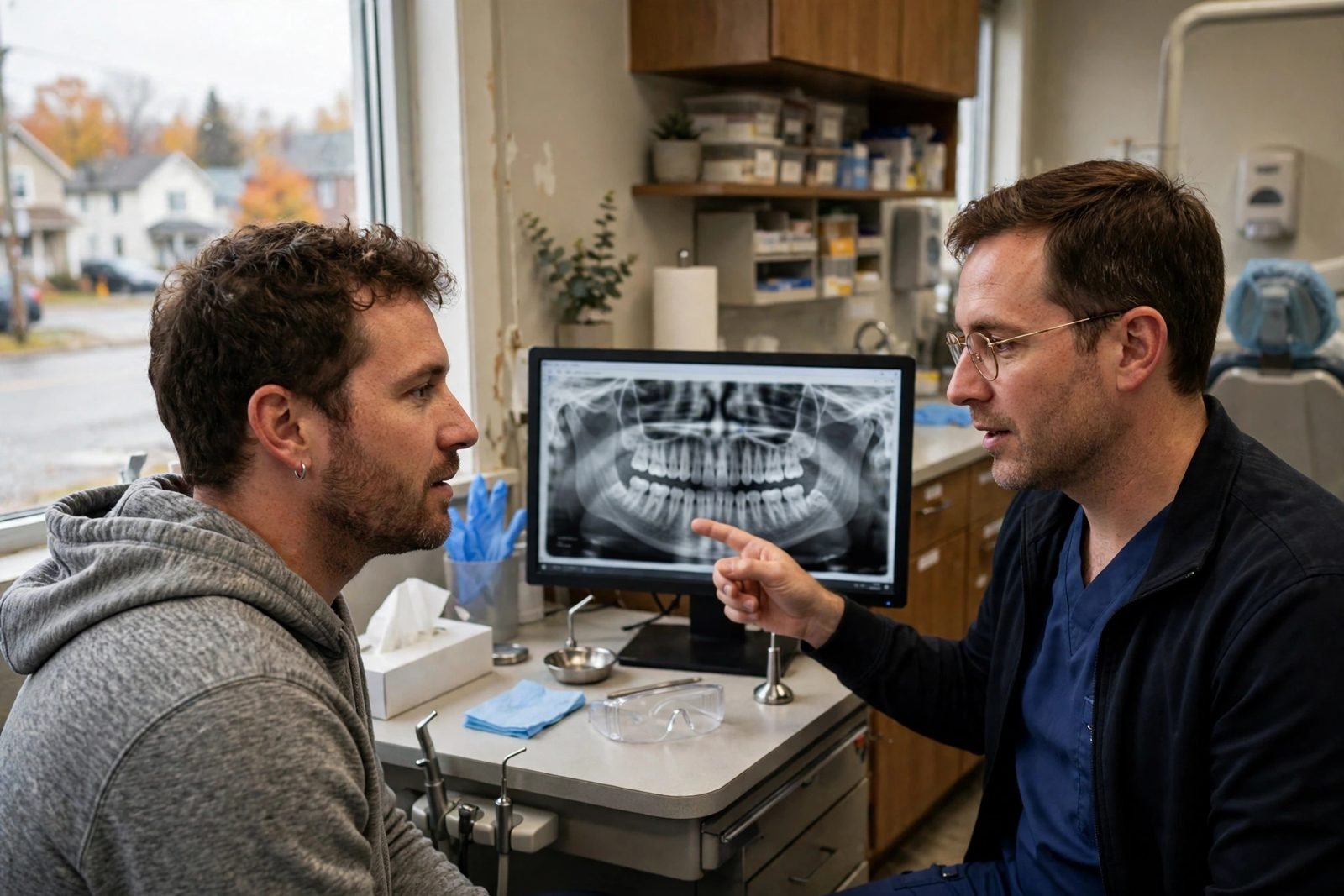
Start with, “Can you show me which tooth you mean and explain what you found?” A plain-language explanation can help you connect the recommendation to your examination. If an X-ray was used, ask what it adds to the picture.
The Ontario Dental Association’s cavity guide describes how untreated decay can progress. Your dentist can explain what that means in your particular case rather than applying a general statement to every tooth.
Discuss your options before a dental filling
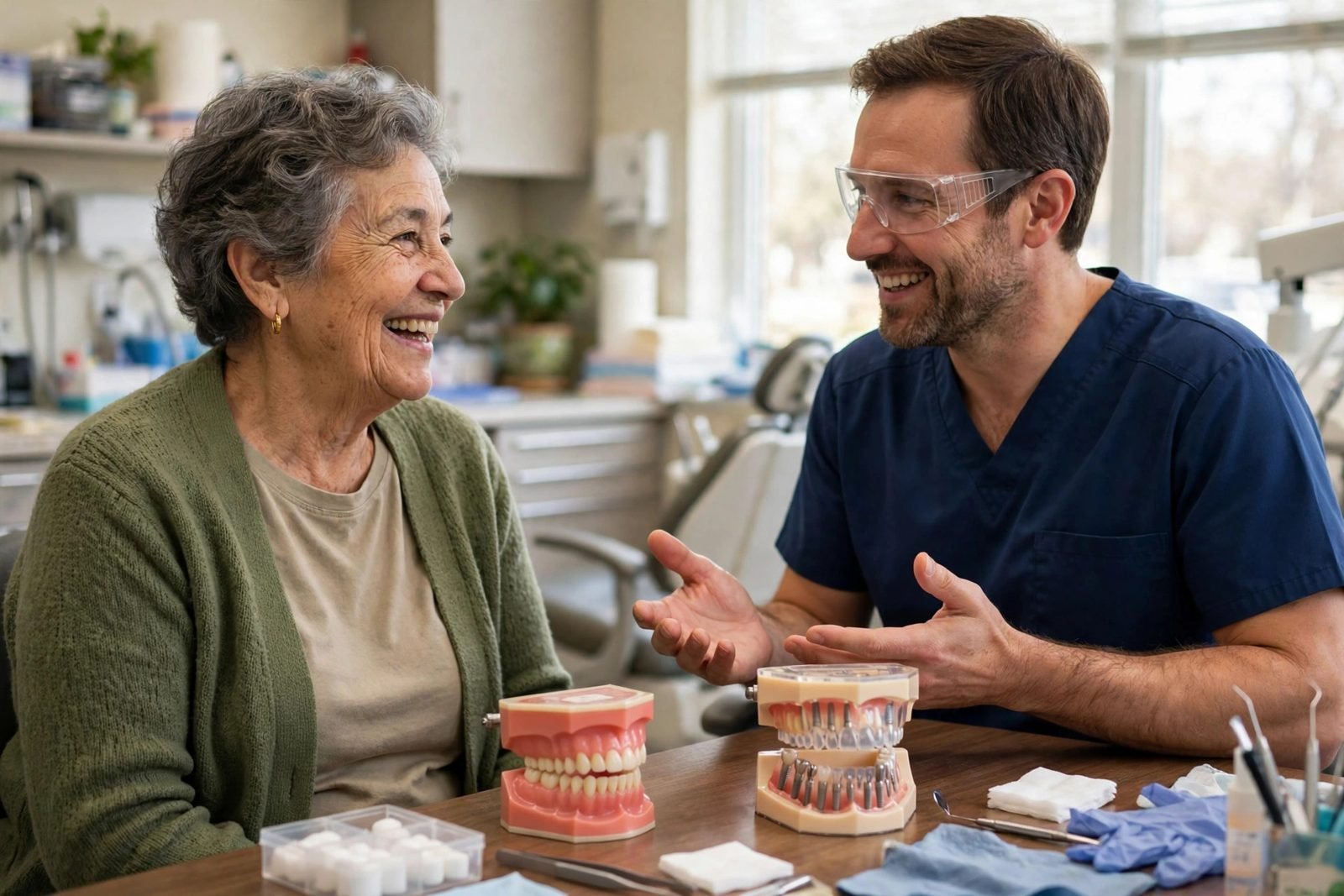
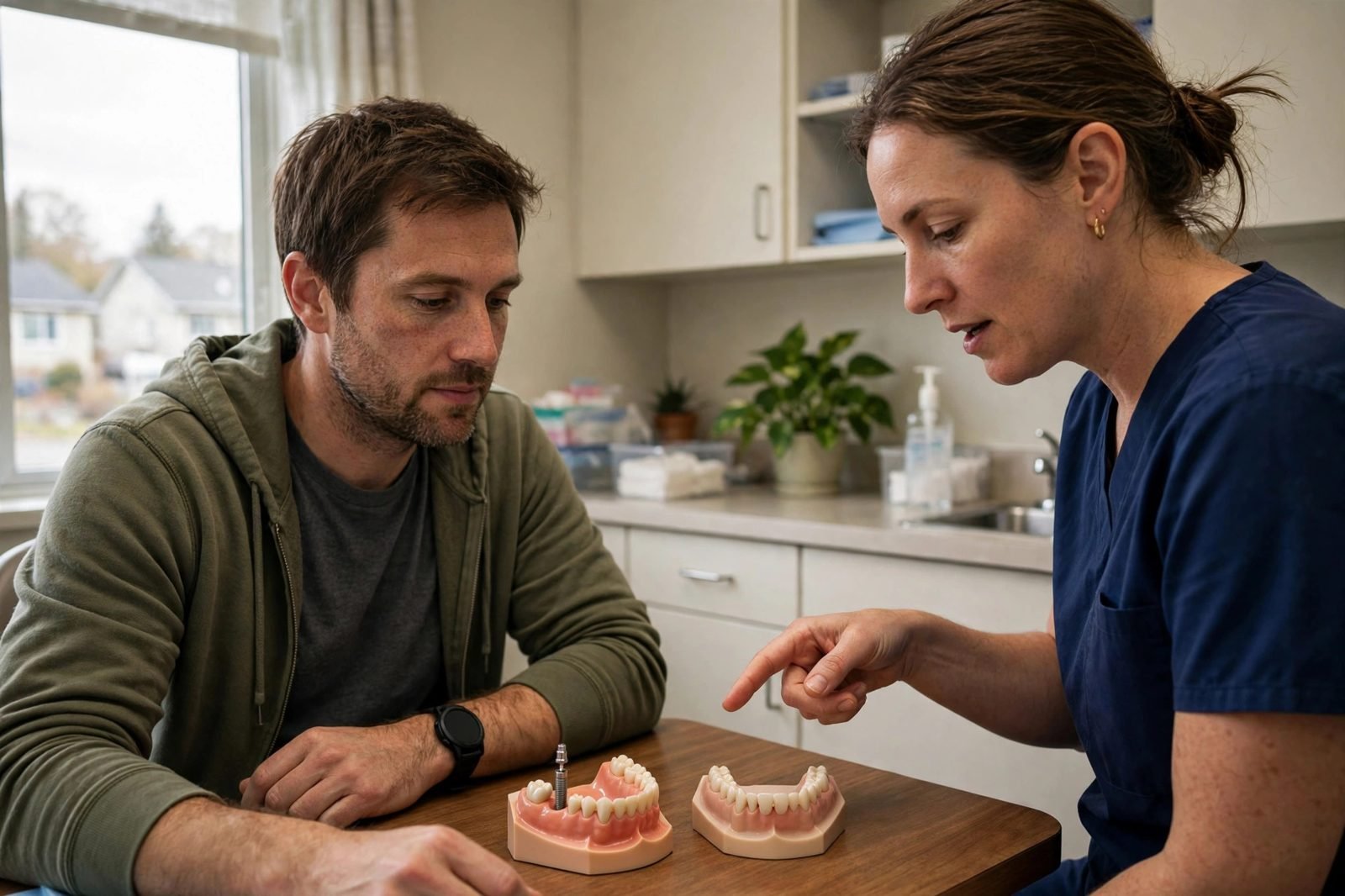
Ask why a filling is recommended and whether any reasonable alternatives are appropriate. You can also ask what may happen if you delay. The answer depends on the tooth’s condition, your symptoms, and the clinical findings.
If you are anxious, say so before treatment begins. Ask how the team will explain each stage and how you can signal that you need a pause. You do not have to hide uncertainty to be a “good patient.”
Bring a short question list
Six questions to take to your appointment
- Which tooth is being treated, and why?
- What are the suitable options for this tooth?
- What should I tell you about medicines or allergies?
- What should I expect when the appointment is finished?
- Will I need another appointment, and what is its purpose?
- Which parts of the proposed care need a CDCP eligibility or authorization check?
Make the aftercare instructions specific
Before leaving, ask when you can eat and what to do while your mouth is numb. Ask how to clean the tooth and which symptoms should prompt a call. If written instructions are available, keep them somewhere you can find them later. Before a dental filling, ask how you can contact the office if an aftercare instruction is unclear. Do not rely on a general online timetable for your own tooth.
If the dentist recommends another appointment, make sure you understand its purpose. It may be easier to arrange it while the treatment discussion is still fresh.
Use general reading to support the conversation
Hola Dentistry’s dental fillings information can help you find the relevant treatment area. The ODA’s common procedures guide provides background on fillings and other treatments.
A guide is a starting point, not a way to diagnose a tooth without an examination. The Canadian Dental Association’s filling-material overview also encourages discussing material concerns with your dentist. Bring the question to the appointment rather than choosing a material solely from an online comparison. If a term is unclear, bring it to the appointment and ask what it means for your care.
CDCP and dental fillings
CDCP includes eligible permanent and temporary fillings. Ask your provider to confirm your proposed treatment against the plan’s current limits and requirements. If the plan changes to include a crown or another service, ask for that service to be checked separately; approval is not automatic.
Read Hola’s CDCP information together with Canada.ca’s coverage guide.
Bring your questions to Hola Dentistry
Contact Hola Dentistry in Bradford if you need clarification before a filling appointment. A short list of questions can help you leave with a plan you understand.
Frequently asked questions
Should I ask to see which tooth needs treatment?
Yes. Ask the dentist to identify the tooth and explain the findings in language you understand.
Can a cavity exist without pain?
Yes. Ask how the dentist identified the problem; pain is not the only reason a tooth may need treatment.
What if I am nervous about the appointment?
Tell the team beforehand. Discuss how the procedure will be explained and how you can ask for a pause.
Should I mention medicines and allergies?
Yes. Provide an up-to-date list and let the dentist know about relevant health conditions.
When can I eat after the filling?
Follow the instructions for your procedure and material, including precautions while the area is numb.
Can I discuss alternatives before a dental filling?
Yes. Ask which options are clinically appropriate and how they compare for your particular tooth.
General patient information, reviewed against the linked professional and government resources on 26 October 2026. This guide does not replace an individual dental assessment.
References
- Royal College of Dental Surgeons of Ontario (RCDSO): CDCP Information for Patients
- Ontario Dental Association (ODA): Common Dental Procedures
- Ontario Dental Association (ODA): Cavities and Tooth Decay
- Canadian Dental Association (CDA): Dental Fillings: Overview
- Government of Canada: Canadian Dental Care Plan: What Services Are Covered
Sources accessed 26 October 2026.
Book a Consultation
It’s easy and free!