
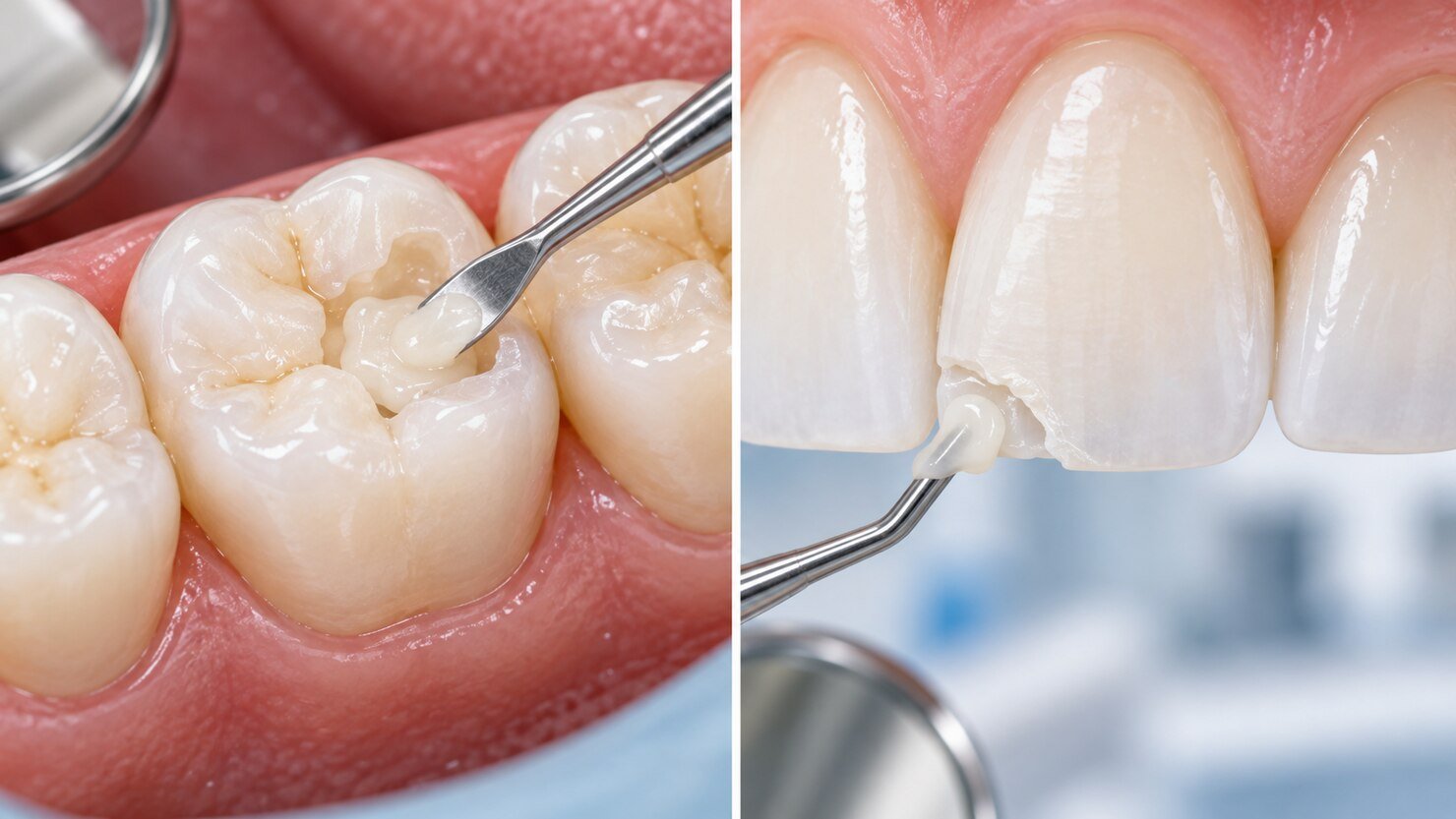
Dental bonding and white fillings can both use tooth-coloured composite resin, but they are not necessarily the same treatment. A white filling is generally used to restore part of a tooth affected by decay or damage, while dental bonding is more often used to repair or reshape a smaller area of a tooth, such as a chip, minor gap, uneven edge, or selected cosmetic concern.
Because similar materials may be used in both procedures, the difference is often less about the colour of the resin and more about why the material is being placed and what the tooth needs.
Key point: The appropriate treatment cannot be determined from appearance alone. A dentist needs to assess whether the problem is primarily decay, structural damage, a cosmetic concern, or a combination of factors.
Quick Comparison
White Fillings vs Dental Bonding at a Glance
White Dental Fillings
A white filling is primarily used to restore tooth structure affected by decay or localized damage. Tooth-coloured composite resin is commonly used so the restoration can blend with the surrounding tooth.
Dental Bonding
Dental bonding generally uses tooth-coloured composite resin to repair or reshape a localized area of a tooth, such as a small chip, minor space, uneven edge, or selected cosmetic concern.
What They Have in Common
Both procedures may involve tooth-coloured composite resin that is shaped directly on the tooth and hardened with a curing light.
What Makes Them Different
The main distinction is usually the treatment objective. A filling restores lost or damaged tooth structure, while bonding is often used to repair or modify a smaller area for structural or cosmetic reasons.
What Is a White Dental Filling?
A white filling is a tooth-coloured restoration commonly made from composite resin.
When a cavity requires treatment, the dentist removes the affected tooth structure, prepares the area, and places restorative material into the prepared portion of the tooth. Composite resin is generally placed and shaped directly in the tooth and hardened with a curing light before the dentist finishes and checks the restoration.
The important point is that a filling has a restorative purpose: it replaces tooth structure that has been lost or removed because of decay or damage.
The size and location of the affected area, the amount of healthy tooth structure remaining, chewing forces, and other clinical factors can influence which type of restoration is appropriate.
Learn more about Dental Fillings in Bradford and how dentists assess teeth that may need restorative treatment.
What Is Dental Bonding?
Dental bonding also commonly uses tooth-coloured composite resin, but the treatment goal can be different from that of a filling.
Instead of restoring an area affected by a cavity, bonding may be used to add material to part of a tooth to repair or change its shape or appearance.
A dentist may consider bonding for selected concerns such as:
- A small chip in a tooth
- A minor space between teeth
- An uneven or worn tooth edge
- A localized shape irregularity
- Selected cosmetic concerns involving the tooth surface
Not every cosmetic concern is suitable for bonding. The condition of the enamel, the amount of tooth structure involved, the patient's bite, and the reason for treatment all need to be considered.
Visit our Dental Bonding in Bradford page for more information about this treatment.
Is Dental Bonding the Same as a Composite Filling?
Not exactly.
The terminology can be confusing because both procedures may involve composite resin and a bonding process.
The easiest way to understand the distinction is to look at the reason the material is being placed.
A composite filling primarily restores an area of tooth structure affected by decay or damage. Dental bonding generally adds or reshapes composite material to repair a smaller structural or cosmetic concern.
There can be overlap between the techniques and materials used. Dentistry does not always fit into simple labels, which is why a dental examination is more useful than choosing a treatment based only on the name of the procedure.
When Might a White Filling Be Recommended?
A dentist may consider a filling when an examination shows that a localized area of the tooth needs to be restored.
Tooth Decay
If decay has damaged part of a tooth and a direct restoration is appropriate, the affected area may be removed and restored with filling material.
A Damaged Existing Filling
A dentist may recommend repair or replacement when an existing restoration has fractured, become loose, developed a defect, or has another clinical problem.
Minor Tooth Damage
Some relatively small areas of structural damage may be restored directly with composite material, depending on how much healthy tooth structure remains and the forces placed on the tooth.
Important: An older filling does not automatically need replacement simply because of its age. The condition of the restoration and the surrounding tooth should be assessed before treatment is recommended.
When Might Dental Bonding Be Considered?
Bonding is generally associated with more localized repairs or cosmetic changes.
Repairing a Small Chip
Composite resin may be shaped to rebuild a small missing portion of a tooth when the tooth is suitable for this type of repair.
Adjusting Tooth Shape
Bonding can sometimes be used to alter a minor irregularity in tooth shape or contour.
Closing a Small Space
In selected cases, composite material may be added to adjacent tooth surfaces to reduce the appearance of a minor space.
Addressing a Localized Cosmetic Concern
Bonding may also be considered for selected appearance-related concerns when the tooth is otherwise suitable for treatment.
The correct approach depends on the condition of the tooth rather than the cosmetic goal alone. Decay, gum health, bite problems, or insufficient tooth structure may change the treatment plan.
What If You Have a Chipped Tooth and a Cavity?
This is where treatment labels become less useful.
A chipped tooth may have:
- No decay at all
- An existing restoration
- Underlying decay
- A fracture involving more tooth structure than it first appears
- A bite-related issue contributing to repeated damage
The dentist needs to identify the cause and extent of the problem before deciding how to restore the tooth.
A small chip may sometimes be repaired with direct composite bonding. A tooth affected by decay may need a filling. A tooth with more extensive structural damage may require a different restorative approach.
The goal is to treat the actual condition of the tooth, rather than choosing between bonding and a filling based only on how the tooth looks.
White Fillings vs Silver Fillings
White composite fillings and traditional dental amalgam are different restorative materials.
Composite resin is tooth-coloured, while amalgam has a metallic appearance. The materials have different physical characteristics, clinical considerations, and aesthetic properties.
Material selection should be discussed with your dentist based on the tooth being treated, the location and size of the restoration, chewing forces, your oral health, and the treatment options appropriate to your individual situation.
If your main concern is whether a visible filling can blend with the surrounding tooth, ask your dentist specifically about tooth-coloured restorative options.
How Does a Dentist Decide Which Treatment You Need?
The decision begins with diagnosis, not material selection.
During an assessment, the dentist may consider:
- Whether tooth decay is present
- How much healthy tooth structure remains
- Whether an existing filling is damaged
- The size and location of a chip or defect
- The position of the tooth
- Chewing and biting forces
- The condition of the enamel
- Your overall oral health
- Your treatment priorities and cosmetic goals
Dental X-rays may also be recommended when clinically appropriate and when information below or between the visible tooth surfaces is needed.
Only after the condition has been assessed can the dentist explain whether a filling, dental bonding, or another treatment option should be considered.
Questions to Ask Before Choosing Treatment
If you are discussing a filling or bonding treatment with your dentist, useful questions include:
- What is causing the problem with this tooth?
- Is there active decay?
- Is the treatment primarily restorative or cosmetic?
- How much healthy tooth structure remains?
- Why are you recommending this treatment instead of another option?
- What are the limitations of the proposed restoration?
- What maintenance will it require?
- Are there other reasonable treatment options?
A treatment decision should be based on the condition of the tooth and your individual needs, not simply on the name or appearance of a procedure.
Dental Fillings or Bonding in Bradford
If you have a chipped tooth, possible cavity, damaged filling, or another concern and are unsure which treatment may be appropriate, the first step is a dental assessment.
A dentist can examine the tooth, identify the underlying problem, and explain whether a filling, dental bonding, or another treatment option should be considered.
For information specifically about cavities and damaged restorations, visit our Dental Fillings in Bradford page.
If your concern involves a small chip, shape, spacing, or another cosmetic issue, learn more about Dental Bonding in Bradford.
Frequently Asked Questions About Dental Bonding and White Fillings
Is dental bonding the same as a white filling?
+
Not exactly. Both treatments may use tooth-coloured composite resin, but a white filling primarily restores tooth structure affected by decay or damage. Dental bonding is often used to repair or reshape a smaller area of a tooth for structural or cosmetic reasons.
Can the same composite material be used for bonding and fillings?
+
Similar tooth-coloured composite resin materials may be used in both procedures. The treatment objective, location of the material, condition of the tooth, and clinical technique help determine how the restoration is planned.
Do I need a filling or bonding for a chipped tooth?
+
It depends on why the tooth is damaged and how much tooth structure is involved. A small chip may sometimes be repaired with composite bonding, while a tooth affected by decay or another structural problem may require a filling or a different restoration. A dental examination is needed to determine the appropriate approach.
Can dental bonding be used to close a small gap?
+
In selected cases, composite bonding may be used to reduce the appearance of a minor space between teeth. Suitability depends on tooth position, bite, enamel condition, the size of the space, and the overall treatment goal.
Does an old white filling automatically need to be replaced?
+
No. Age alone does not determine whether a restoration needs replacement. A dentist should assess the filling, surrounding tooth structure, margins, symptoms, and other clinical findings before recommending repair or replacement.
Clinical information: This article provides general oral-health information and does not determine whether dental bonding, a filling, or another restoration is appropriate for an individual tooth. Treatment recommendations require a dental examination. Sources reviewed include Canadian Dental Association information about fillings, tooth-coloured restorations, dental bonding, and veneers.
Not Sure Whether You Need a Filling or Dental Bonding?
If you have a chipped tooth, possible cavity, damaged restoration, or another concern, a dental assessment can help identify the underlying problem and clarify which treatment options may be appropriate.
Hola Dentistry can assess the tooth, discuss your concerns, and explain whether a filling, dental bonding, or another treatment option may be appropriate for your individual needs.
Book an Appointment